SHARE


LIXIL Spotlights Circular Innovations ‘revia’ and ‘PremiAL’ at COP31 in Türkiye: Transforming Waste into Scalable Building Solutions
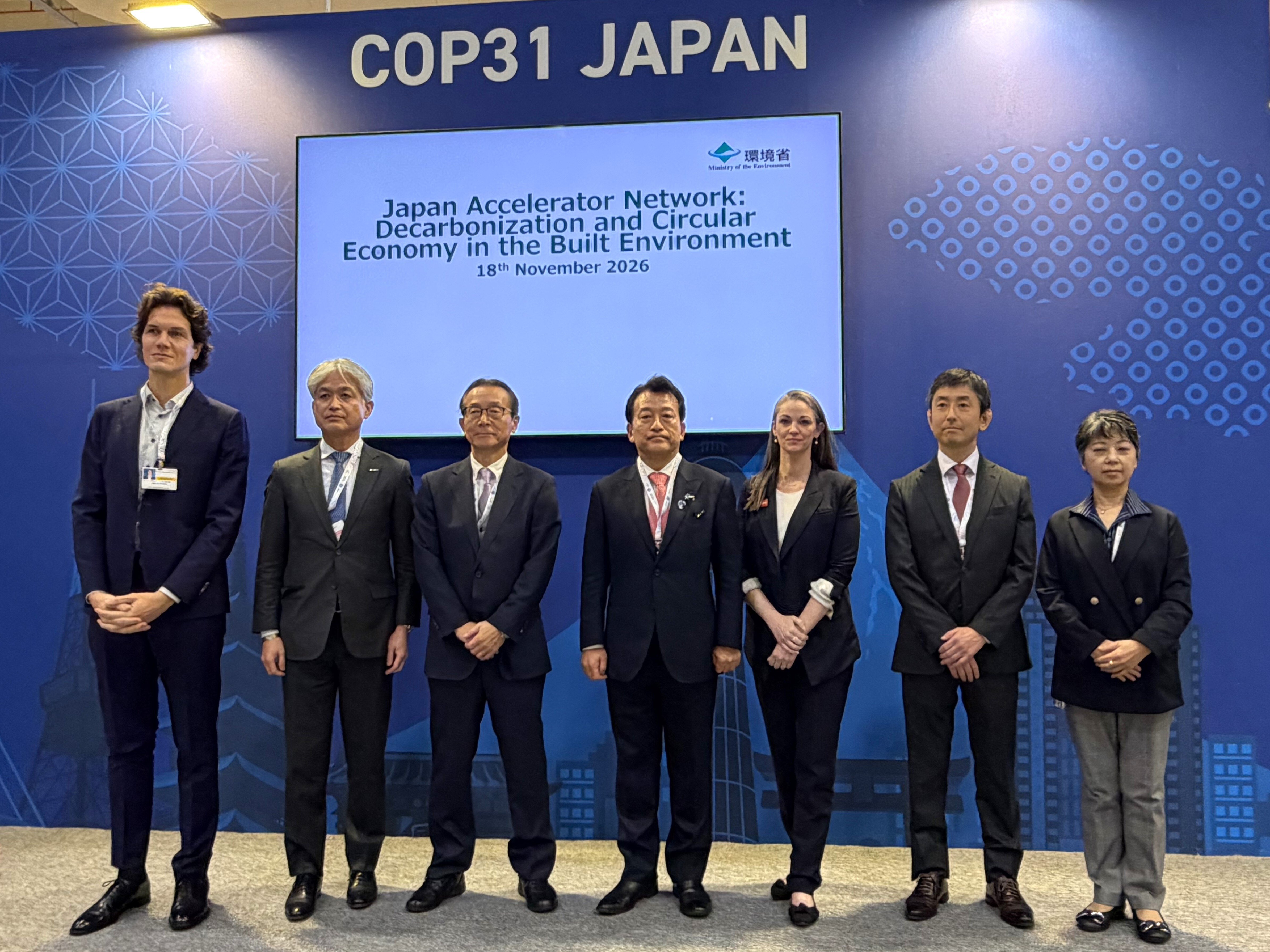
ANTALYA/TOKYO – LIXIL Corporation (“LIXIL”, TSE Code: 5938), maker of pioneering water and housing products, saw its Chief Impact Officer (CIO) Erin McCusker present the company’s circular materials, “revia” and “PremiAL,” at the COP31 Japan Pavilion in Antalya, Türkiye. Representing LIXIL in its capacity as a Co-Chair of the Japan Accelerator Network, McCusker emphasized the urgent need for cross-sector collaboration to scale circular economies and tackle escalating global environmental challenges, from the plastic waste crisis to embodied carbon.
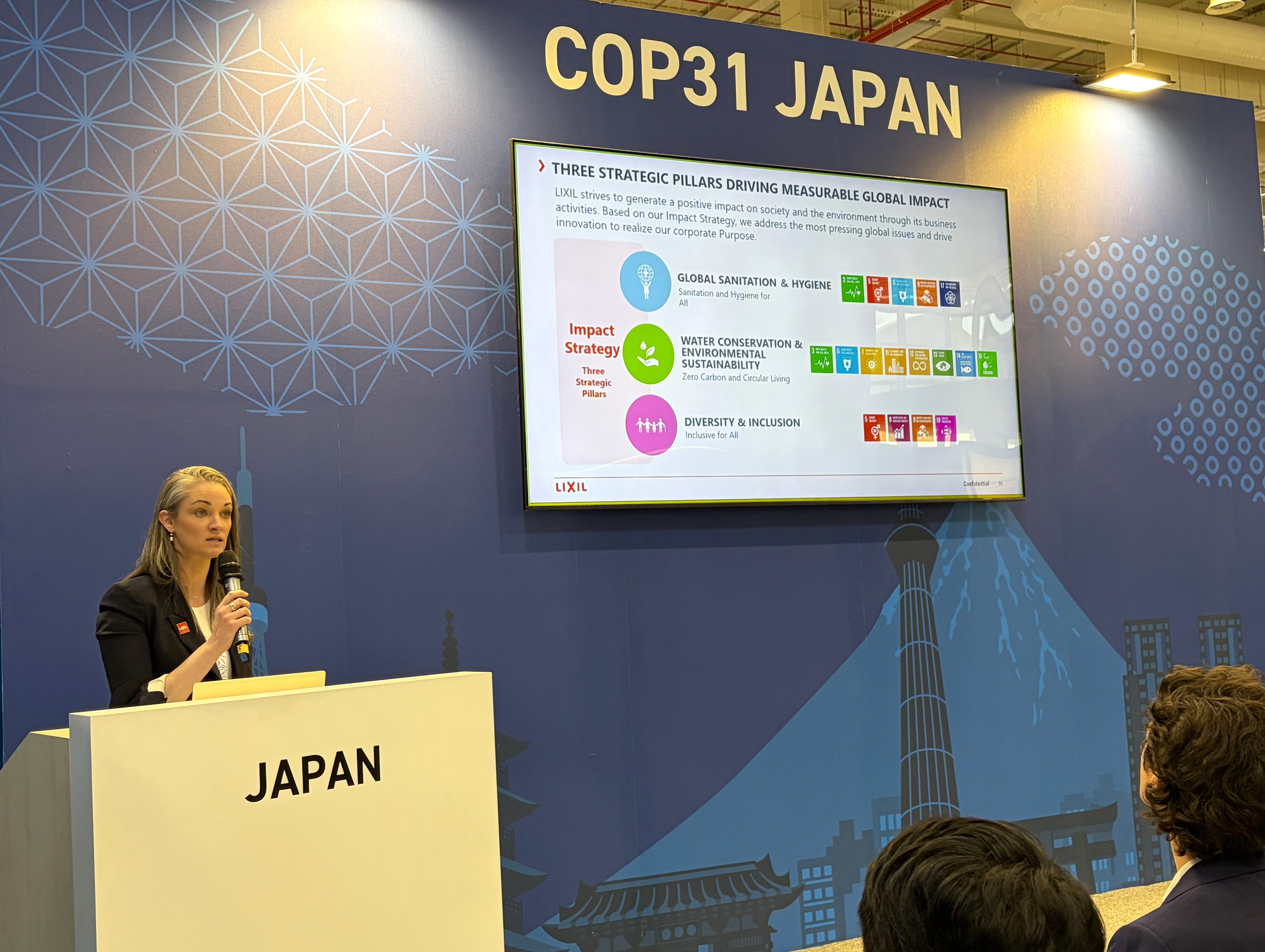
The session, jointly hosted by Japan’s Ministry of the Environment (MOEJ) and the World Economic Forum (WEF), focused on actionable solutions to drive resource circulation and decarbonization in the built environment.
A primary focus of LIXIL’s presentation was “revia,” a proprietary circular material designed to upcycle waste wood and hard-to-recycle mixed household plastics. Traditionally, these complex mixed plastics are rejected by standard recycling facilities and routed directly to incinerators or landfills. LIXIL’s technology rescues and transforms this waste into durable, versatile decking materials. By bringing revia to market, LIXIL is offering a scalable, tangible solution that closely aligns with global circularity initiatives.
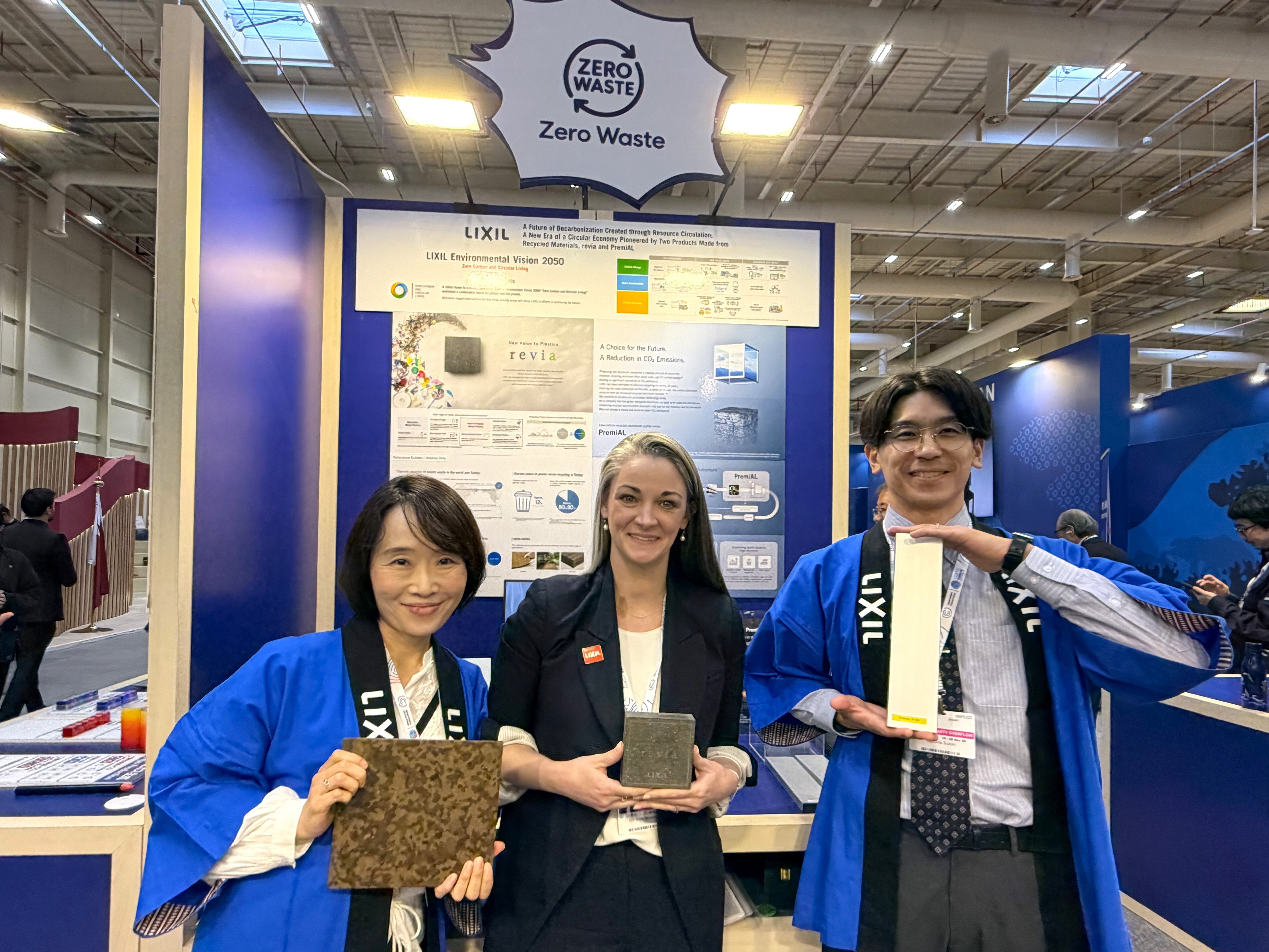
Alongside its efforts to combat plastic pollution, McCusker also highlighted LIXIL's commitment to decarbonizing traditional building metals through “PremiAL¹” Manufactured using 100% recycled aluminum scrap, “PremiAL R100” reduces manufacturing CO₂ emissions by approximately 80% compared to virgin aluminum ingots. Demonstrating its commitment to reshaping industry standards, LIXIL has deployed PremiAL – with a minimum of 60% recycled aluminum content² and backed by third-party SuMPO EPD certification³ – as a standard specification across its aluminum products⁴ in Japan, striving to offer these low-carbon solutions without an environmental price premium.
McCusker noted that while the building and construction sector is responsible for roughly 37% of global CO₂ emissions, it possesses massive, untapped potential to act as a sink for repurposed global waste. By deploying innovations like revia and PremiAL, the industry can actively transition from a linear "take-make-dispose" model to a closed-loop system.
Offering LIXIL's initiatives in Japan as a practical example, the company is utilizing its platform at COP31 to invite international collaboration. While revia and PremiAL were previously primarily available in Japan, LIXIL is now actively looking at expanding this part of its business to global markets.
“To achieve a truly decarbonized society, transitioning to a circular economy is not optional—it is essential. However, we realize that circularity cannot be achieved in isolation,” said McCusker. “This is why we are seeking to forge robust public and private partnerships to co-create and scale innovations together. By providing verified circular materials like revia and PremiAL, we aspire to work alongside our partners to reshape market standards. Our dual mandate ensures that we deliver tangible solutions for the planet while driving sustainable business growth.”
To learn more about LIXIL’s Impact Strategy, see here.
1. A recycled low-carbon aluminum that reduces CO₂ emissions generated during product manufacturing by approximately 50–80% compared to aluminum extrusions using 100% new ingots.
2. Of raw materials (LIXIL-manufactured 6063 alloys, dissimilar alloys, and purchased billets), the LIXIL-manufactured 6063 alloys utilize 60% or more recycled aluminum. Dissimilar alloys and purchased billets are excluded from the calculation.
3. CO₂ emissions calculated to include LIXIL-manufactured 6063 alloys, dissimilar alloys, and purchased billets. Third-party SuMPO EPD verification obtained.
4. Only for aluminum extrusions manufactured by LIXIL
SHARE
Related articles
- NEW
LIXIL Spotlights Circular Innovations ‘revia’ and ‘PremiAL’ at COP31 in Türkiye: Transforming Waste into Scalable Building Solutions
-
 NEW
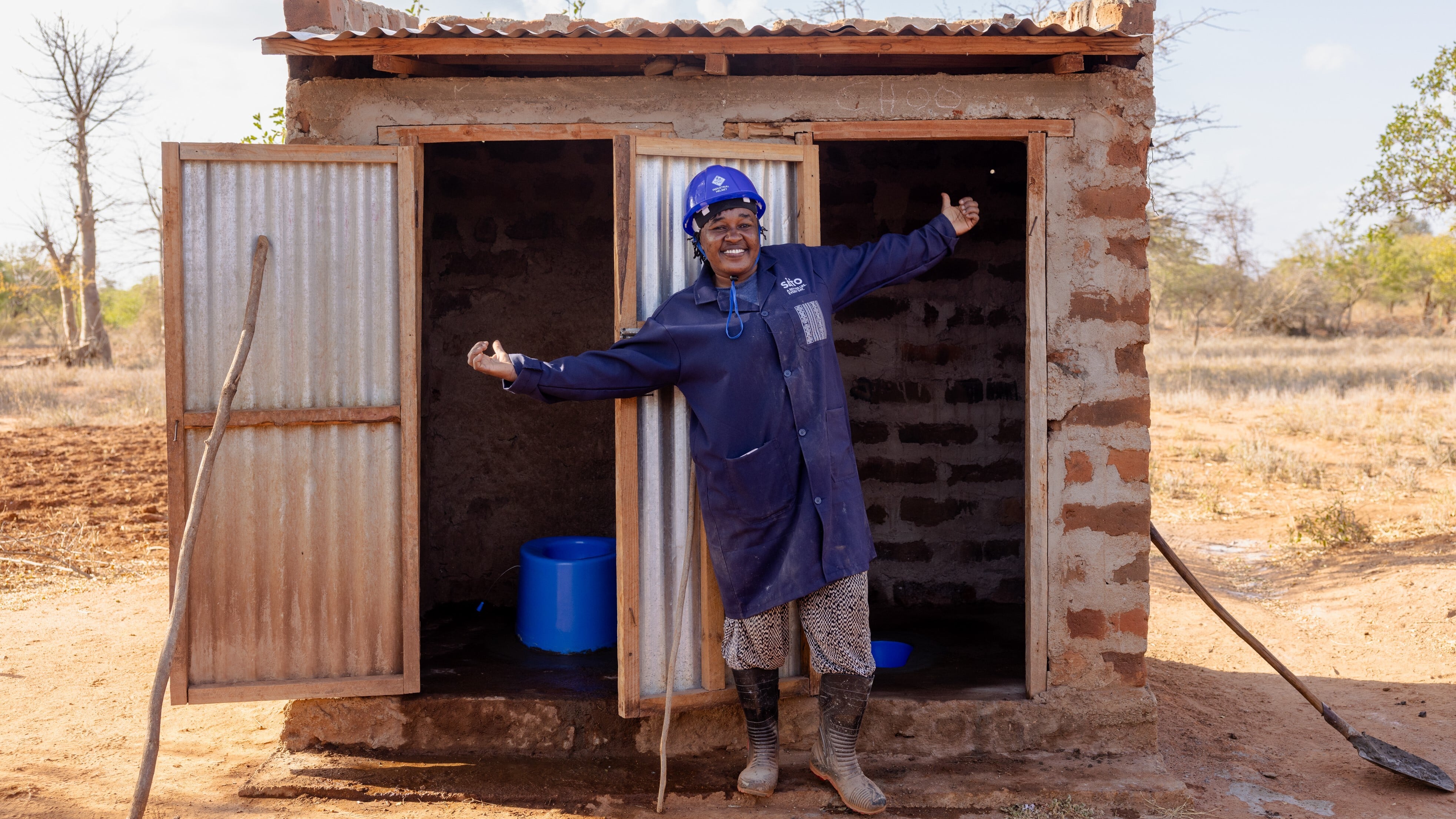
Bridging Crisis and Resilience: LIXIL’s Global Push for Sanitation Economies to Reach Next 100M
-
 NEW
LIXIL Achieves Industry-Leading “B-” Rating and Retains “Prime” Status in 2026 ISS STOXX Corporate Rating